Precise control over every component within the tire structure is paramount. Tires need to support higher speeds, greater loads, and increasingly stringent performance requirements. Manufacturers must look beyond the major production processes and consider how seemingly small details can influence finished tire quality.
One of those details is gum edging of belts and plies.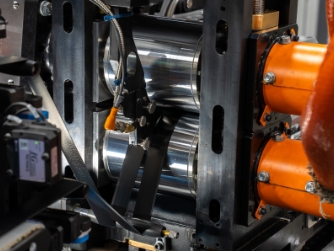
For manufacturers producing steel belt, steel and textile body ply, and other reinforced tire components using traditional calendering systems, gum edging is an important element of the process to ensure the quality and resilience of the finished tire.
In gum edging, precisely applied rubber strips, or gum strips as they are often called, are positioned on the top, bottom, or wrapped around the edges of steel belt, steel body ply and textile body ply, to help reduce friction and promote bonding between tire components.
The challenge is applying that material accurately without compromising the calendered component’s quality, dimensional stability, or production speed.
Steelastic addresses that challenge with hot gum edging and cold gum edging technologies that can be integrated into existing tire component manufacturing lines, giving manufacturers a way to enhance conventional calender-based production without replacing the underlying process.
Understanding Steel Belt Production in a Calender-Based Process
Steel belts play an essential role in radial tire construction. They reinforce the tire’s crown, contribute to dimensional stability, and help the tire maintain its intended shape under operating loads.
In a conventional manufacturing process, parallel steel cords are introduced into a calender, where rotating rolls apply rubber to produce a wide reinforced sheet. The material is subsequently processed into the required widths and angles for tire building.
Calendering remains deeply established throughout the global tire industry and can provide significant production capacity. However, producing the calendered sheet is only part of the process. Downstream operations must convert that material into finished components that meet increasingly precise specifications.
Gum edging has become an important part of this downstream processing, particularly for premium and high-performance tires.
A gum edge is a rubber strip applied along the steel belt’s edges, or wrapped around its edge. Depending on the tire specification, gum material can also be applied to textile body ply components.
The gum material’s relatively small size can disguise its importance to the finished tire.
Why Is Gum Edging Used in Tire Manufacturing?
Where the reinforced tire component’s edges interact with surrounding materials, mechanical stress can develop. Manufacturers like Steelastic identify reducing or eliminating friction between tire components as a primary function of gum edging. The additional rubber also supports bonding between belt, body ply, and adjacent tire components.
The process can provide several important functions.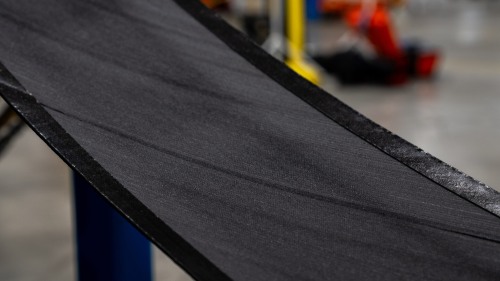
Friction and heat management are among the most significant. The additional rubber at the belt edge helps isolate reinforcement material and reduce friction that could otherwise contribute to localized heat and wear.
Bonding is another consideration. The gum material adds additional rubber at the component edge, helping create a strong interface with surrounding rubber components.
Finally, component transition matters. The gum layer can provide a smoother transition between the steel belt and surrounding rubber, reducing stress concentrations within the tire structure.
These requirements become increasingly significant as tire constructions become more sophisticated, as seen in premium, high performance and electric vehicle tires.
The Manufacturing Challenge: Precision Without Distortion
Knowing where gum belongs is relatively straightforward. Applying it consistently at production speed is considerably more challenging.
Modern steel belt designs can be relatively thin. That makes controlling the material during downstream processing especially important. Excessive tension or force during gum application can stretch the belt and move it outside dimensional specifications.
Steelastic has identified three particular challenges facing legacy gum application equipment: applying gum without stretching increasingly thin steel belts, achieving the required placement accuracy, and accomplishing both without sacrificing line speed.
A successful gum edging process therefore needs to control several variables simultaneously:
- Gum width and gauge
- Position relative to the belt edge
- Belt tension and dimensional stability
- Flat versus wrapped application
- Material handling
- Line speed
This is where specialized gum edging technology can complement an existing calender line.
Hot vs. Cold Gum Edging at a Glance
Hot gum edging is particularly attractive when a manufacturer wants to eliminate separate gum calendering and slitting operations, reduce poly liner waste, and produce precise gum profiles on demand.
Cold gum edging may be preferred when pre-manufactured gum stock is already part of the plant’s material flow, frequent production interruptions are expected, or the facility prioritizes the operating characteristics of a roll-fed application process.
Both can support flat and wrapped applications, and both can provide a route to more accurate, automated gum placement.
That flexibility is especially important for establishing tire plants. Improving steel belt production doesn’t necessarily mean replacing an existing calender.
Hot Gum Edging: Producing and Applying Gum in One Process
In a hot gum edging system, rubber compound is extruded to create the required gum profile before being applied to the reinforced component. Because the material remains warm after extrusion, it has increased tack during application.
Steelastic’s Double Roll Roller Die (DRRD) Hot Gum Edging System advances this approach by extruding rubber through a die and into a double-roll system. The resulting material is precisely formed, slit, and then either top-applied or wrapped around the steel belt edge. The system can produce gum as thin as 0.25 mm, and is engineered for tight control of both width and gauge.
One of the largest manufacturing advantages is what the hot process eliminates.
Conventional cold gum must first be produced, slit, lined with polyethylene, wound, transported, stored, and ultimately unwound at the application process. Hot gum edging removes several of those operations because gum is extruded and profiled as part of the edging process.
It also eliminates the polyethylene liner associated with cold gum stock. That reduces liner purchasing and disposal requirements while removing a potential source of tire contamination. Direct application of warm material can also reduce the possibility of entrapping air during application.
For manufacturers evaluating waste reduction and process consolidation, those are significant considerations.
Cold Gum Edging: Speed and Operational Flexibility
Hot gum isn’t automatically the right answer for every line. 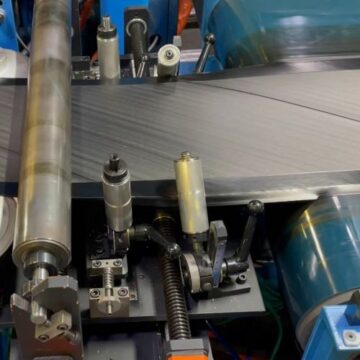 There are applications where cold gum edging offers important operational advantages.
Cold gum begins as previously manufactured calendered rubber stock. The material is applied to a polyethylene liner, wound into rolls, slit into the required dimensions, and later unwound by the gum edging system for application to the belt or body ply.
Because the gum itself doesn’t have to be extruded during application, cold gum systems can provide advantages for production environments characterized by frequent stops and starts. Steelastic also highlights active strip guiding and single-or dual-let-off arrangements with accumulation to support continuous processing during roll changeovers.
Steelastic’s cold system is fully automated and designed to apply the strip precisely while preventing the reinforced component from stretching during application.
The decision between hot and cold therefore shouldn’t be reduced to which technology is “better.” It’s about selecting the process that best matches the plant’s existing production strategy.
Comparing Steelastic’s Hot and Cold Gum Edging System Capabilities
Both systems have their place in the tire manufacturing process. Here is a quick at-a-glance comparison between Steelastic’s gum edgers’ technical information.
| Capability | Hot Gum Edging System | Cold Gum Edging System |
|---|---|---|
| Belt Width Range | 100mm (4″) – 355mm (14″) | 100mm (4″) – 1270mm (50″) |
| Belt Gauge Range | 0.5mm (0.02″) – 2mm (0.08″) | 0.5mm (0.03″) – 2mm (0.08″) |
| Gum Width Range | 40mm (1.57″) – 100mm (4″) | 13mm (0.5″) – 48mm (1.9″) |
| Gum Gauge Range | 0.25mm (0.01″) – 1.5mm (0.06″) | 0.5mm (0.02″) – 3mm (0.12″) |
| Line Speed | 3m/min (118″/min) – 21m/min (68’/min) | 3m/min (118″/min) – 25m/min (82’/min) |
Supporting Existing Calender Systems Instead of Replacing Them
Steelastic is well known for its extrusion-based, calenderless, tire component technology, but that doesn’t mean its equipment is limited to calenderless factories.
This distinction is important.
Many tire manufacturers have substantial investments in existing calender infrastructure. Those lines may continue to meet the plant’s fundamental capacity requirements, but may not be able to produce the range of components needed in the modern high-SKU tire market.
Gum edging can be addressed independently.
Steelastic’s Cold Gum Edging System is designed for integration into existing or new tire component production lines, including equipment from other manufacturers. The DRRD Hot Gum Edging System can likewise be added to tire component manufacturing lines beyond Steelastic systems.
For a conventional calender plant, that creates an opportunity to modernize a specific portion of component preparation rather than undertake a complete process replacement.
Choosing the Right Gum Edging Strategy
Determining the appropriate technology requires looking at the entire production environment rather than gum application in isolation.
Manufacturers should consider existing gum preparation methods, desired line speed, belt dimensions, required gum gauge and width, stops and starts frequency, changeover requirements, liner consumption, scrap objectives, and available floor space.
The tire specification itself remains the starting point. The goal isn’t simply to add rubber to a belt edge. It’s to apply the correct profile in the correct position without adversely affecting the reinforced component being processed.
That requires control of the gum and control of the belt.
Modernizing Tire Component Production One Process at a Time
Tire designs are changing, and existing manufacturing 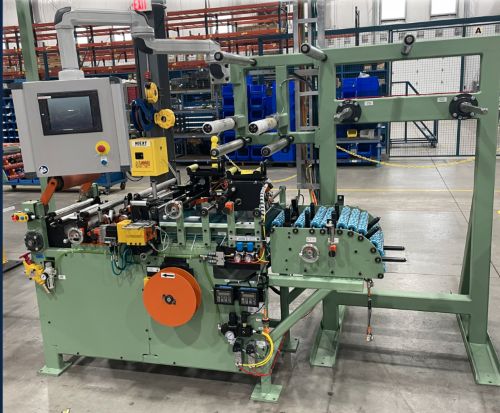 processes must evolve with them. For plants built around traditional calender systems, modernization doesn’t always require abandoning proven equipment. Targeted investments in downstream processes can address new specifications while preserving valuable existing infrastructure.
Gum edging is a strong example.
What appears to be a small strip of rubber can influence friction management, component bonding, and the finished material’s quality. Applying it accurately and efficiently requires technology capable of keeping pace with increasingly demanding tire specifications.
With both hot and cold gum edging solutions, Steelastic gives manufacturers the flexibility to select the approach that best complements their production environmnt. And because these systems can be integrated with existing tire component equipment, they offer a practical route for calender-based plants to improve precision, automation, efficiency, and flexibility without replacing the process that already works.
For manufacturers looking to strengthen existing calender operations, the opportunity may not be to rebuild the entire line. It may be to identify the downstream processes where modern technology can make the biggest difference.
Contact the Tire Experts Today
Explore Steelastic’s gum edging system to improve your tires’ quality. Contact us today to visit our facilities and see the gum edging system in action.