Calenderless component preparation systems are the future of tire manufacturing. Traditional 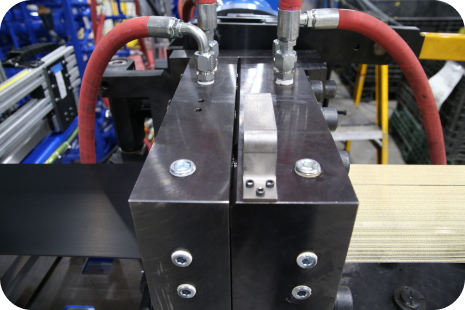 calendering systems, long considered the backbone of reinforced tire component production, are increasingly challenged by the mounting pressure of delivering more SKUs, tighter tolerances, faster changeovers, and improved cost efficiency. Going calenderless is the modern approach to producing reinforced tire components.
Calenderless technology represents a fundamental shift in how reinforced tire components are manufactured. Rather than forming wide reinforced steel and textile rubber sheets using large calenders, calenderless systems use extrusion-based, continuous processing to produce steel belt, steel and textile body ply, steel and textile cap strip, and other reinforced components in a more integrated and streamlined workflow.
Calenderless systems, to put it simply, deliver much more efficient tire component manufacturing, incorporating higher levels of automation, improved quality, with reduced labor and utilities usage.
Steelastic has been at the forefront of this transition since its founding in 1970, pioneering extrusion-based calenderless systems that redefine how tire components are produced across passenger car, truck and bus, off-the-road, motorcycle and aircraft tire applications.
What “Calenderless” Means in Tire Manufacturing
In a traditional tire manufacturing plant, calendering involves passing rubber compounds and reinforcement materials (steel or textile cords) through large, precision rollers to create reinforced sheets. These sheets are typically produced in batch processes and wound into large rolls. They’re stored as work-in-progress and then transported to downstream cutting and splicing equipment to produce the finished tire component.
This calender-based approach, while proven, introduces complexity, increased wastage, extra labor, utilities and floor space demands, and material handling inefficiencies.
Calenderless technology replaces much of this workflow with an extrusion-based process from creel to finished component. Instead of forming wide rubber sheets via calenders, reinforcement material is precisely coated in rubber using an extrusion process in a controlled, integrated process, from creel, through extrusion, cutting, splicing, gum edging and windup of finished material, in one continuous production cell.
The result is not just a different machine, but a restructured manufacturing philosophy.
Steelastic’s Calenderless Origins: A Process-Level Innovation
Steelastic traces its roots to the development of a revolutionary calenderless process for steel belt extrusion, cutting, and splicing, introduced at a time when conventional calendering dominated tire manufacturing. Rather than incrementally improving calender performance, Steelastic focused on rethinking the entire production sequence.
This process-level approach remains central to Steelastic’s technology today: fewer discrete machines, fewer handoffs, and tighter control over every step that defines component quality.
The Core Idea: Simplify the Line, Reduce Handoffs
A practical way to understand calenderless technology is through process simplifications.
Calenderless systems aim to:
- Reduce the number of major machines in the line
- Eliminate intermediate storage and handling steps
- Minimize work-in-progress accumulation
- Provide more efficient use of resources, time, and labor
- Increase quality control and accuracy
- Create a continuous, synchronized flow
In conventional calendered environments, each handoff, including movement of calender rolls to intermediate storage, requirement for temperature and humidity control of storage areas, and movement of heavy rolls to cutting and splicing lines, introduces variability, labor, and risk. Calenderless systems consolidate all of these steps into a single, integrated production line, improving both efficiency and consistency.
Key Advantages of Calenderless Technology
Flexibility for Multi-SKU, Shorter Production Runs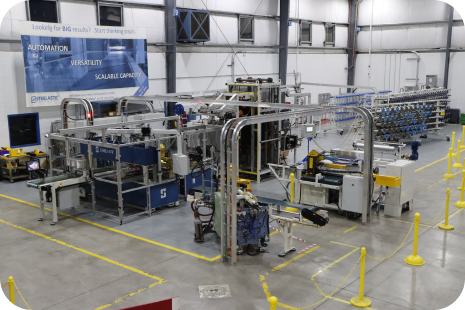
Modern tire portfolios are increasingly complex. Manufacturers must support multiple tire component configuration changes, with frequent size and design changes, differing rubber and reinforcement material changes, and shorter production campaigns.
Large calendering lines are typically optimized for long, steady runs. Changeovers can be time-consuming, labor-intensive, and costly.
Calenderless systems, by contrast, are inherently more adaptable. Extrusion-based processing allows for faster recipe changes, quicker transitions between SKUs, and reduced setup time.
This flexibility makes calenderless technology especially well-suited for plants producing high-mix, lower-volume components, or for manufacturers seeking to add incremental capacity without committing to large batch infrastructure.
Smaller Footprint and Reduced Capital Intensity
Traditional calender lines are among the most space and infrastructure intensive assets in a tire plant. They require substantial foundations, additional building height, more floorspace, and heavy crane lifting capacity, along with extensive downstream equipment for cutting, splicing and further processing.
Calenderless systems consolidate this functionality, enabling a much smaller physical footprint. For manufacturers expanding capacity or modernizing existing facilities, this can mean lower building modification costs and reduced upfront capital expenditure. It’s also easier to integrate calenderless systems into brownfield environments.
From a financial standpoint, calenderless technology supports modular growth rather than all-or-nothing investments.
Fewer Process Steps and Reduced Work-In-Progress
One of the most tangible operational benefits of calenderless systems is work-in-progress reduction.
By producing reinforced components in a continuous line, manufacturers can eliminate large rolls of semi-finished material and reduce internal transport and storage requirements. This, in turn, lowers inventory carrying costs and improves traceability and process transparency.
Less work-in-progress also means faster response to design changes, quality issues, or shifts in demand. These are all critical advantages in today’s production environment.
Quality, Consistency, & Process Control
Calenderless extrusion-based manufacturing offers highly precise control over material placement, gauge, and reinforcement alignment. Compared to traditional calendering, extrusion allows for tighter dimensional tolerances, more consistent rubber distribution, and improved control of cord spacing and embedment.
For demanding applications, including aircraft tire manufacturing, these advantages of thin-gauge precision, repeatability, and regulatory compliance are especially non-negotiable.
Integrated process control, often including closed-loop control and recipe-driven automation, helps ensure consistent output not just from batch to batch, but across entire production campaigns.
Scrap Reduction and Total Cost of Ownership
While machine price is frequently the primary consideration in capital equipment selection, calenderless technology encourages a broader evaluation focused on total cost of ownership. Lower scrap rates, reduced material waste, decreased labor, improved quality and flexibility, and increased uptime, all contribute to improved economic outcomes.
Calenderless systems are economically robust production platforms. With their advantages in lifecycle costs, return on investment (ROI), and operational efficiency, they’re much more than niche alternatives.
Why Steelastic Is Central to the Calenderless Conversation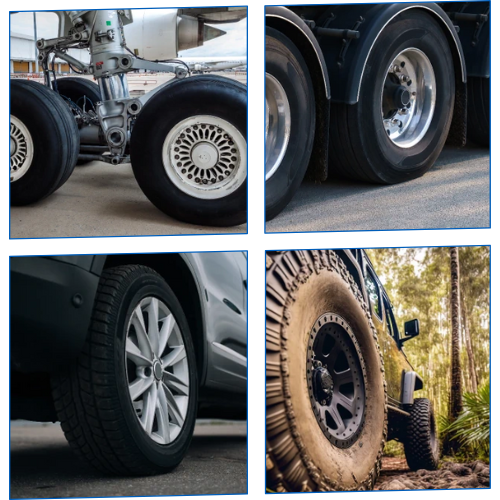
Steelastic is widely recognized as a global leader in extrusion-based calenderless equipment, supporting passenger car, truck and bus, off-the-road, motorcycle and aircraft tires.
Beyond equipment supply, Steelastic differentiates itself through its in-house calenderless manufacturing cell, where customers can run trials using their own materials, validate component designs, and optimize process parameters before full-scale deployment.
This capability reinforces Steelastic’s position not just as a machine builder, but as a process partner, helping manufacturers de-risk adoption and accelerate time to production.
Calenderless Technology: Responding to Industry Pressures
Calenderless technology is not a solution in search of a problem. It directly addresses three defining pressures in modern tire manufacturing:
SKU Proliferation: As tire portfolios expand, manufacturers need highly flexible systems that can adapt without excessive downtime or complexity.
Demand Volatility: Shorter planning horizons and fluctuating volumes favor flexible, continuous processes over large batch-oriented lines.
Efficiency Expectations: Manufacturers are under constant pressure to reduce footprint, labor, scrap, utility usage, and work-in-progress while maintaining or improving quality.
Calenderless systems are designed to meet these pressures head-on.
A Strategic Shift Toward Simpler, Smarter Production
Calenderless technology represents more than a change in machinery. It reflects a broader shift toward leaner, more responsive tire manufacturing. By reducing process steps, consolidating equipment, and improving control, calenderless systems enable manufacturers to stay competitive in an increasingly complex market.
Steelastic’s long-standing leadership in this space demonstrates how extrusion-based, calenderless production can deliver tangible advantages in flexibility, quality, and total cost performance.
For manufacturers navigating SKU growth, capacity expansion, or modernization initiatives, calenderless technology offers a proven path toward greater adaptability and operational efficiency without unnecessary complexity.
If you want to learn about the advantages of calenderless tire manufacturing, visit our headquarters in Cuyahoga Falls, Ohio. You’ll get a firsthand look at our calenderless systems, and have the opportunity to run trials using your own tire component materials and specifications. Once your trial is complete, we’ll handle the packing and shipping of the components to your facility for building, testing, and validation.