ire manufacturers are continuously faced with growing product complexity, increasing demand for specialized tire designs, and market volatility that requires faster response times than ever before. At the same time, capital investment decisions must balance performance, efficiency, and long-term flexibility.
To meet these challenges, many tire manufacturers are rethinking the traditional structure of production lines. Instead of building large, fixed manufacturing systems designed around a single production model, companies are increasingly turning to modular manufacturing systems.
Modular equipment architecture offers a new approach to tire production, one that supports scalability, operational efficiency, and the ability to adapt as manufacturing requirements change. Steelastic is one of the leading manufacturers that have helped advance this concept through modular equipment platforms. These platforms integrate seamlessly with modern tire manufacturing processes, including extrusion-based tire component production systems.
The Changing Landscape of Tire Manufacturing
Several forces are driving the shift toward modular manufacturing systems.
Expanding Product Portfolios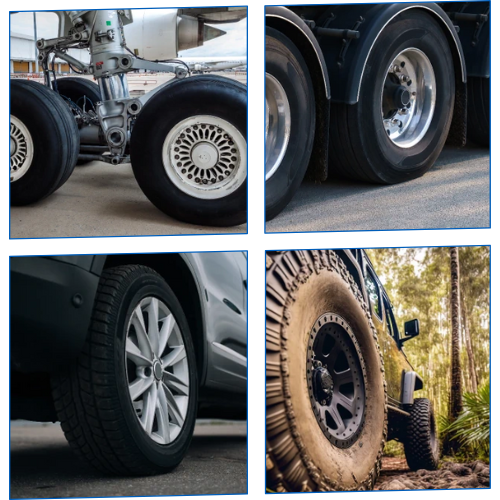
Tire manufacturers today produce a far wider range of products than in the past driven by a variety of factors including vehicle performance, weight, demanding applications and end-user preference. Passenger vehicles, including electric vehicles, motorcycles, commercial trucks, buses, off-road equipment, aircraft, and specialty applications, all require different tire constructions and reinforcement structures.
This huge expansion in product variety means production lines must support frequent product changes, multiple reinforcement configurations, different material combinations, and shorter production runs.
Traditional large-scale manufacturing lines were optimized for high-volume, long-campaign production. While effective in stable environments, these systems can struggle to accommodate the increasing variability of modern tire production.
Demand Volatility
Global supply chains and changing market conditions require manufacturers to respond quickly to shifts in demand. A production system that can easily scale output up or down provides significant operational advantages.
Continuous Innovation in Tire Design
Electric vehicles, sustainability initiatives, and advanced materials are driving ongoing innovation in tire construction. Manufacturing systems must be capable of adapting to new designs without requiring complete factory overhauls.
Modular equipment architectures address these challenges by providing flexible building blocks that can evolve alongside production needs.
What is Modular Manufacturing?
In simple terms, modular manufacturing systems are built from configurable production units that can be combined, expanded, or reconfigured as needed.
Rather than installing a single monolithic production line, manufacturers deploy multiple modules that each perform specific functions. These modules can operate independently or as part of a larger integrated system.
A modular approach allows manufacturers to add production capacity incrementally and reconfigure production layouts more easily. Operators can also upgrade individual process stages without replacing entire lines while supporting multiple product types within the same facility.
This flexibility makes modular systems particularly valuable in industries experiencing rapid technological and market change.
Scalability: Growing Production Without Major Disruption
One of the most important advantages of modular manufacturing systems is scalability.
Traditional tire production equipment often requires significant infrastructure investment, and long installation timelines. Expanding production capacity may involve large construction projects, with high capital expenditure, and extensive downtime.
Modular systems allow manufacturers to expand capacity gradually by adding additional modules as production requirements increase.
For example, a tire manufacturer may begin with a single production module designed to support a specific product line. As demand grows, additional modules can be installed to increase output without disrupting the existing production system.
This incremental growth model offers several benefits, including lower initial capital investment, reduced financial risk, faster response to market demand, and greater flexibility in long-term capacity planning.
Scalable manufacturing systems provide a practical way for tire manufacturers to align capital investments with evolving production requirements.
Efficiency: Productivity Achieved Through Streamlined Manufacturing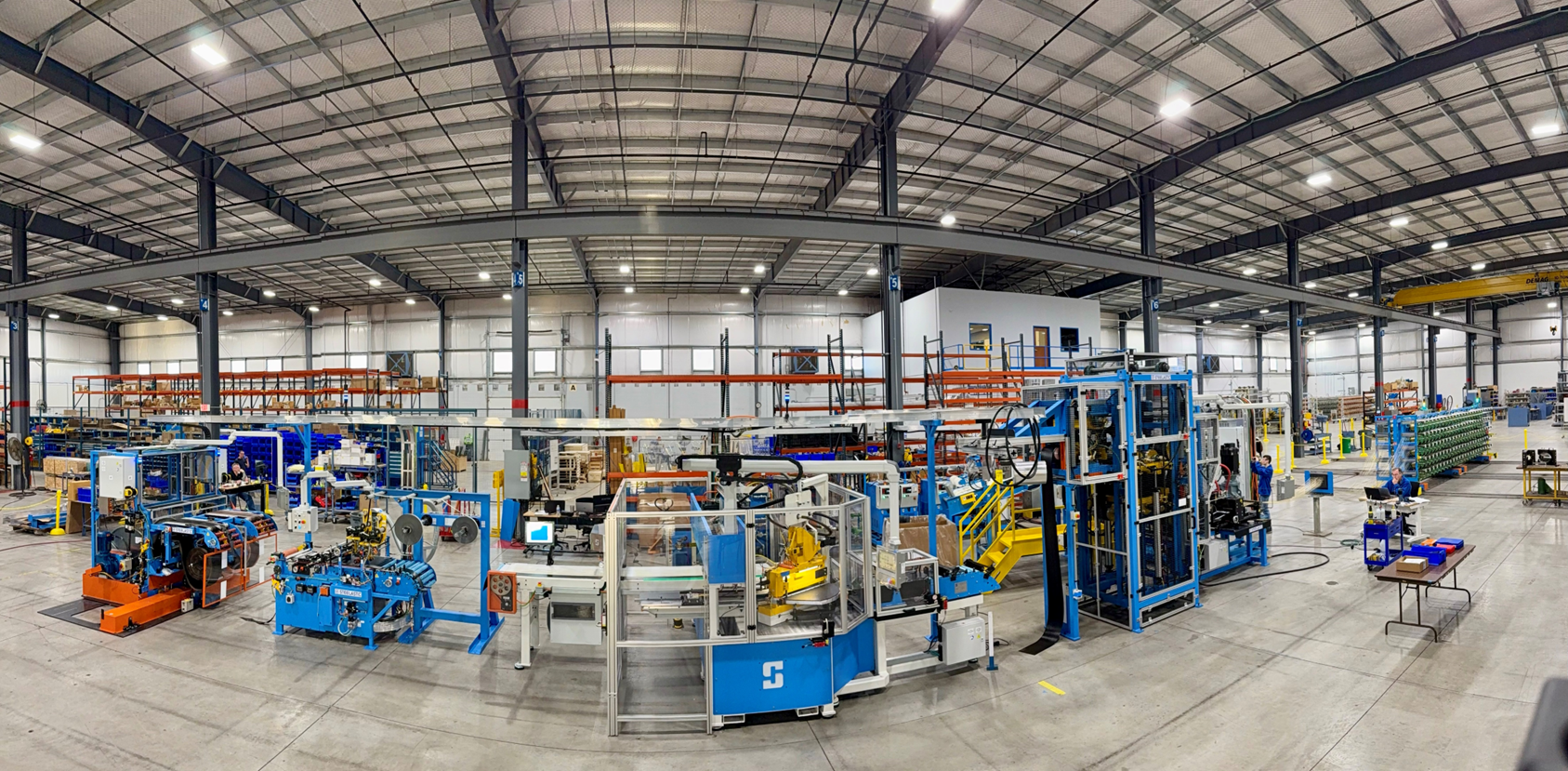
Modular systems also support improved production efficiency by simplifying plant layouts and reducing unnecessary material handling.
In traditional tire manufacturing environments, processes are often separated into distinct stages requiring intermediate storage and transportation of materials. These handoffs can introduce delays, increase labor requirements, and complicate production planning.
Modern modular systems, particularly those incorporating extrusion-based tire component manufacturing technology, integrate multiple process steps within a streamlined workflow from creel to finished component wind-up. This integration reduces work-in-progress inventory, internal material transportation, storage requirements, and production complexity.
As a result, manufacturers can achieve more efficient production flows while maintaining greater control over process variables.
A Future-Minded Approach: Modular Design and Extrusion-based Tire Component Technology
Extrusion-based manufacturing technology represents a natural complement to modular production architectures.
In conventional tire plants, calendering machines produce reinforced rubber sheets that must be stored, transported, and processed on additional cutting, splicing and slitting equipment before becoming finished tire components.
Alternatively, extrusion-based systems combine the reinforcement materials encapsulation in rubber compound within integrated cutting, splicing, gum edging and and windup operations. This becomes a ‘one stop process’ production line.
By eliminating large calendaring equipment and separate offline processing stages, extrusion-based systems support the modular philosophy of simplified, flexible manufacturing.
This combination of modular design and extrusion-based processing enables manufacturers to build production environments that are both efficient and adaptable.
Faster Adaptation to New Tire Designs
Innovation in tire design continues to accelerate as manufacturers respond to changing vehicle technologies and customer expectations.
Electric vehicles, for example, introduce new performance requirements such as increased torque loads, unique tread designs, and improved rolling resistance characteristics.
Modular manufacturing systems help manufacturers adapt to these changes by allowing specific process modules to be updated or replaced without requiring a complete production line redesign.
For instance, a new reinforcement structure may require adjustments to component manufacturing equipment. In a modular system, these updates can often be implemented by modifying a specific module rather than overhauling the entire production process.
This flexibility helps manufacturers keep pace with innovation while protecting existing equipment investments.
Supporting the Factory of the Future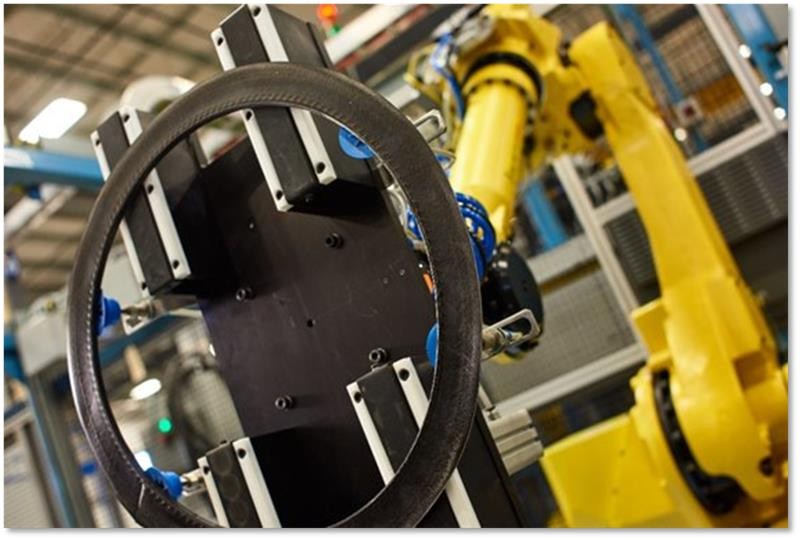
The concept of the “smart factory” continues to gain traction across the manufacturing sector. Digital monitoring systems, advanced analytics, and autonomously connected production equipment are transforming how factories operate.
Modular manufacturing systems are well aligned with these developments.
Because modular systems are inherently flexible and configurable, they can more easily integrate new technologies such as real-time process monitoring, predictive maintenance systems, automated quality control, autonomous vehicle handling, and data-driven production optimization.
By combining modular equipment architectures with modern digital manufacturing tools, tire producers can build facilities designed for long-term operational intelligence and adaptability.
Reducing Risk in Capital Investment
Large manufacturing projects often involve substantial capital commitments. In uncertain market environments, these investments can carry significant financial risk. Modular manufacturing strategies allow companies to take a more measured and phased approach to investment.
Rather than committing to large, all-at-once infrastructure projects, manufacturers can deploy equipment in stages as production requirements become clearer.
This phased investment model offers several advantages, including improved financial flexibility, reduced exposure to market volatility, faster implementation timelines, and greater alignment between capacity and demand.
For many manufacturers, modular systems provide a more sustainable path toward long-term production growth.
A Future-Ready Manufacturing Strategy
As tire markets continue to evolve, manufacturing systems must become more adaptable, efficient, and resilient.
Modular production architectures offer a powerful solution to these challenges. By providing scalable capacity, streamlined production workflows, and the ability to adapt to new technologies, modular systems help manufacturers prepare for the future while maintaining operational efficiency today.
Steelastic has been at the forefront of this shift, combining modular equipment platforms with advanced extrusion-based manufacturing technologies to help tire producers modernize their operations.
In an industry defined by continuous innovation, the ability to evolve is one of the most valuable capabilities a manufacturing system can offer. Modular systems make that evolution possible. They create production environments that aren’t only efficient today but ready for whatever comes next.